Rethinking the Root Cause of Sleep Issues
90 days ago, I thought my sleep problem was just about habits, basically going to sleep earlier. Maybe take some different supplements and start tracking stuff, but what I discovered instead is that sleep isn’t really about sleep at all. It’s about stress, the nervous system, and whether you actually feel in control of your life.
The Purpose of This Sleep Experiment
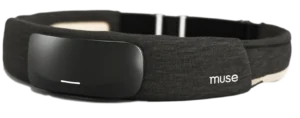
I’m going to show you what 90 days of real sleep data taught me, including what worked, what completely backfired, and why my worst nights are no longer catastrophic. Last week, my average sleep score was only 70, but one day I hit a 90, and it completely changed my life. I’m using the Muse and tracking my sleep for 90 days to figure out how to hit 90 consistently.
Week 1: A Surprising Breakthrough
Week 1, my average was 70, and that one day, that one 90-day period, it was magical. I didn’t test any variable this week. Honestly, that 90 totally happened by accident, I’m just as surprised about it as you are. I went to bed after midnight, so I did not go to sleep early, and I slept until 9 am. But the next morning, I felt like a new human being. I had clear thinking, fast thinking, I was happy without trying. Life just felt easy.
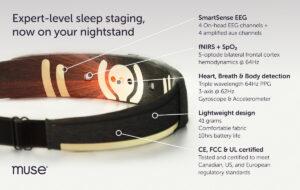
I got 2 hours of REM sleep and an hour and a half of deep sleep. Muse is great because it now has AI that you can talk to about what your data means. I slept more on my right side than my left, and that actually surprised me. And check out my brainwaves, Muse measures delta, beta, alpha, beta, and gamma.
So week 1 taught me this: life is better with great sleep, and it is absolutely worth figuring out how to get 90 more often.
Week 2: When Things Backfire
Instead of improving, one night I got a sleep score of 42. It’s week 2, and my sleep score dipped to 69. And honestly, it hit me harder than expected.
This week, I tried something new. I used the Muse digital sleep pill more consistently, and I stayed with surf and space visualization to fall asleep earlier and finally get 8 hours of sleep. But instead of improving, one night I got a sleep score of 42, which was one of the lowest sleep scores ever. When I look at my Muse data, it makes total sense, though. I slept 6 hours, but I woke up over and over again. In the wild part, I only got 7 minutes of REM sleep. I got over an hour of deep sleep, but the intensity of that deep sleep wasn’t as good as I usually get.
So not only did I not get good, deep sleep, but my REM sleep was basically non-existent. That explains exactly why the next day was so emotionally brutal. I was pessimistic. I was mean to myself. I was thinking these awful thoughts. I could tell how negative I was, but I couldn’t stop it. It felt like my brain wasn’t even mine. That day taught me something huge. After a bad night of sleep, I cannot trust any thought about the future that is coming out of my brain. I have to remember, you only think it this way because you didn’t sleep. And that was really hard to do in the moment, all day long.
Now I feel that overall, the digital sleep pill helped me fall asleep more quickly. I really like it. Now, L-theanine is supposed to be very good for just about everything related to sleep. You’re supposed to relax more, fall asleep faster, stay asleep longer, and have better quality sleep, all without feeling drowsy.
Week 3: Tracking Patterns and Setbacks
Week 3 in my 90 days to an 80 sleep score, this week, my sleep score dipped again. I averaged 68, which is 1 point lower than last week. And yes, that is not the direction I want things to go. This week, I took 200mg of L-theanine every night, about 30 minutes before bed, along with the digital sleep pill, and I used to surf in space. I really love that one. And honestly, I really felt the difference. L-theanine helped me fall asleep faster without those weird vertigo feelings I get from melatonin.
My brain is, let’s just say, sensitive, so I’m usually cautious with supplements. But that one magical night of a 90 sleep score, oh my gosh. I want that. And for most of the week, I was holding a solid average, until Sunday. This is the second Sunday in a row that I’ve gotten terrible sleep, and again, my sleep score is 42. You can see I was awake from 1.30 am. I could not shut my brain off. It just would not stop. It was instantly racing as soon as I woke up. And the more I stayed awake, the madder I got at myself.
It was so annoying because all I wanted to do was sleep, and I just couldn’t shut my brain off. So when I look at my Muse data, everything clicked. On November 6th, that night, I scored a 75. I slept from 11 pm to 6.30 am, totally manageable, but look how choppy my sleep was after 1.30 am. So I had four wakeups. Back to sleep quickly, but still it was fragmented. And Enso, that’s Muse’s new AI, explained that my arousal index was low.
What really stood out was this. Consistent sleep is everything. They’re absolutely wrecking my sleep, and then I’m not as productive the next day. My big takeaway for week three. I have to stop waking up at 1.30 am in the morning. It is destroying my sleep as well as my days.

Week 4: Discovering the Role of Temperature
I woke up overheating at 2.17 am, and my Muse data showed why. This is week four of my 90-day push to an average sleep score of 80 or above. My weekly average was 65.
I’m going backwards again. I’m doing all the things you’re supposed to do, and yet it still is that I’m still moving backwards in my score. So I kept taking 200mg of L-theanine, and I was really trying to aim for 10.30 pm, lights out, go to sleep. So I’m falling asleep faster now, but I keep waking up. And every time I wake up, my brain is just like flipped on like a light switch. It’s going a mile a minute. One night, I got so frustrated and so mad that I couldn’t fall back to sleep. I just got up out of bed and went and read in the living room for 20 minutes. And then I did some GABA spray at 4.30 am. And that night, believe it or not, I got a 71 sleep score. That was definitely worth it.
I was a teeny bit groggy in the morning, but I’ll take a 71 or feeling like a sleep zombie any day. But then I got a 56 sleep score. And that is when the Muse data finally gave me the clue that I needed. On both of those bad nights, the first time I woke up was because I was hot. Winter heat is kicking in, and I normally love a really warm room and like mountains and mountains of blankets. But the Muse data told a different story.
From 2 to 4 am, my Muse data showed that I was moving constantly. I was still asleep technically, but I was restless. I was tossing and turning and having those micro-wakeups. And then Enso, which is Muse’s AI, pointed out that your body became more active right before you woke up. That line clicked for me. I heard it for years that sleep is better in a cold room, but now I’m seeing it in my data.
I still don’t want to sleep in a cold room. That’s not really what I want. But if that’s what my body needs, then yes, I’m going to do it. My big takeaway for week four. It might not be stress. It might not be supplements. Maybe temperature might be the real root cause of my wakeups.
Week 5: Adjustments and Small Wins
My brain, while I sleep, is calm for about an hour and then really hectic. Can you guess what flipped the switch in my brain? My weekly average improved this week. I kept going backwards. Now we’re two points better than last week. And the colder room is helping. I kept the room cold all night. I even set the thermostat to drop a degree while I was sleeping.
I also stopped the L-theanine. It really helped me fall asleep fast, and I created a good habit around that. But at 2 a.m., my thoughts just were so turbocharged that that’s not really me. I felt like I needed to stop it and see how that goes. Sunday was still rough, but not a disaster; instead of another 42, I got 58. I kept telling myself, sleep deeply and quickly. Sleep deeply and quickly. And here’s the part that I really love.
REM sleep I got was about an hour. Deep sleep I got about an hour as well. And the Muse AI rated my deep sleep intensity at 98. When I look at the brainwave power bands in that early block, they’re calm and deep and powerful, and this is what I want to have like all night through. So pausing L-theanine seems like the right thing to do because my mind isn’t racing as much. When I wake up, my mind is still going, but just not as much as before with the L-theanine. And the cold bedroom clearly moved the numbers in the right direction.
Cold bedroom, it actually does make a difference. The brainwave power band graph is becoming more and more something that I’m looking at to figure out what to optimize next.
My week six goal is simple. More of those calm power bands. And to get them, I am now going to try glycine. Glycine is a nice calming neurotransmitter for the brain. It helps quiet the nervous system. And it supports falling into deeper stages of sleep more efficiently. I definitely need that. And here’s the cool thing. It might even slightly lower core body temperature.
So that’s why I’m definitely going with glycine. Let’s try that for next week.
Week 6: Unexpected Success During Travel
Thanksgiving week, I traveled. I ate gluten, dairy, and sugar. And I even had two glasses of wine with Thanksgiving dinner. Basically, this week I have done everything you’re not supposed to do for good sleep. And somehow this was my best sleep week yet.
Week six of my 90-day sleep experiment, and my average sleep score for this week was 83. The one thing that I tested this week was three grams of glycine about an hour before bed. When I look at my muse data, I was honestly shocked. I slept nine hours. Muse even showed I wasn’t perfectly still. I tossed and turned a bit, but the sleep quality was still there.
And I ate all the stuff you’re not supposed to eat. So now I’m questioning everything. Was it the glycine that really calmed my nervous system? Or was it the fact that I didn’t have work and school and all that stress weighing on me? So here’s my conclusion for week six. I’m keeping glycine for the next week, and if I average over 80 again, that’s it. I’m done. I solved it. I just needed glycine.
Week 7: The Impact of Stress Returns
My sleep score crashed from 83 all the way down to 63. This is week seven of my 90-day push to an average sleep score of 80. This week, I didn’t change anything. But my weekly average fell back to 68. And the only variable that changed was stress.
December 2nd was the worst. My REM sleep, 10 minutes. Deep sleep, an hour and one minute. Total sleep, not good at all. And the next day was so emotionally rough. But here’s the upside to knowing my patterns. The very next night, I offloaded stress first. I did a Pilates session to physically tire out.
I did a quiet wind-down breathing session that Muse has – four in, six out. That was really beneficial. I got 80. Stillness, 93%. Slow wave intensity, 80. My deep and REM sleep both returned.
This week taught me something huge. Stress is my biggest factor right now in sleep. Muse doesn’t give me generic advice. It shows exactly how my brain and body sleep so that I can adjust faster and bounce back quicker.
Week 8: The Role of Work and Time Pressure
Week eight, and my sleep score dropped to the worst ever, 61. And this week made something very clear to me. I learned that my sleep is hugely impacted by stress. Work stress, school stress, and time pressure. So when I work past 8.30 p.m., even if I fall asleep quickly, my nervous system just doesn’t settle enough to give me a solid night of sleep. December 9th was rough. And when I looked back, it lined up perfectly with working late. Then on December 11th, I stopped working earlier. And even though my sleep score wasn’t amazing that night, I slept consistently through the night.
I woke up around 5 a.m., just naturally feeling good. And that mattered more to me than the actual number. When I looked at my Muse data, it backed this up. On nights when I protected my evenings, my sleep was more solid and less fragmented. And on December 15th, my data showed something else. What happened was I woke up, and immediately I could tell, I’m awake because I’m hot. And then I looked at the heat, and for some reason, the temperature was programmed to be higher than what I found ideal. So now I’m very aware of all the conditions that my sleep requires. So here’s the takeaway for week eight.
Stress is the main reason I’m having trouble sleeping, but I’m also working with my doctor and doing blood work to make sure I’m not missing anything health-wise.
Week 9: The Power of Reduced Pressure
My sleep score jumped this week, and the data tells a clear story. This is week nine of my 90-day push to an average sleep score of 80 or above. My weekly average was 75 this week, much higher than last week and very close to my goal. Now, the biggest difference is vacation. No work, no schedule, no school pressure.
Just less pressure overall. I still woke up sometimes, but without a set wake-up time, I didn’t have to stress about falling back to sleep. If I woke up, no problem. I just slept in. It also looks like my body prefers a midnight to 9 am rhythm. December 21st, Great sleep. My stillness, my sleep positions were very smooth.
Now, I’m not saying that stress is everything. Let’s get lab results. Let’s get data. I did extensive blood work, but my muse keeps showing the same pattern for me. When my stress goes down, my sleep improves. I’m especially curious about my cortisol levels.
I’m sure you know, as an autism parent, your nervous system never fully rests. So I really want to get to know my cortisol levels. Takeaways for week 9. Flexible mornings, lower pressure, help me sleep better. It’s not earth-shattering, but it is always great for verification. So do you sleep better when mornings are flexible?
Week 10: Lifestyle Context Matters
How did I average a solid 72 weekly score after a 1 am bedtime in almost 2 hours of being awake? This is week 10 of my 90-day push to an average sleep score of 80 for the week. My weekly average this week? 72. Not too bad. Even with one night at a 60. Remember, I used to have some really bad low numbers.
I went to bed around 1 am and then stayed awake for nearly 2 hours. That could have been a disaster. The difference? Vacation. I didn’t have to wake up at 6.30 am for work and school, and I could sleep until like 9, 9.30. That flexibility completely changed the outcome. I also got a big batch of blood work back.
So thyroid labs, fasting glucose, A1c, inflammation markers, CBC, CMP, lipids, homocysteine, vitamin D, ferritin, vitamin B12, MMA, omega 3s. There was a lot. We did a lot of blood work. And almost everything came back in the optimal range. One thing that was slightly off was the reverse T3, which was a little high. And often that’s the body’s way of conserving energy. So under stress or for recovery. So for me, there’s a small confirmation that stress is driving these sleep issues.
I’m still waiting on cortisol results and hormone results. So, week 10 takeaway. Sleep isn’t just about nighttime. It’s about whether your life gives your body room to recover and have less pressure. Less pressure, better sleep scores.
However, I have taught myself a lot of sleep tricks, like sleeping in a very cold room. And I’m actually making that temperature even colder and finding even better results. I’ve also learned how to fall asleep quickly. I’ve used the Muse and the digital sleep pill to help reinforce that habit of when it’s time for bed, let’s go to sleep quickly. So different things like the digital sleep pill. There are a lot of skills about falling asleep.
It seems so simple. I’ll just go to sleep. But it gets quite complicated the older you get.
Week 11: The Pressure of Real Life Returns
Real life hit my sleep hard this week; this week, my average dropped to 64. About 10 points down from last week. This is week 11 of my 90-day push to an average sleep score of 80. What changed?
Schedules. We were back at school and work. And I actually love my work. It’s the pressure that gets me into that time crunch, the early alarm, no matter what. Getting my daughter to school, planning everything, trying to fall asleep earlier than my body actually naturally wants to. My body really prefers this later rhythm, going to sleep around midnight.
But on school mornings, they don’t care. Muse keeps showing me the same pattern when life speeds up. My nervous system feels it. And my sleep score reflects it. My body keeps the score. And so does Muse.
Week 11 takeaway. It isn’t bad sleep hygiene. It’s schedule, pressure, and fighting my chronotype. When the clock demands one thing, and my body wants another, sleep suffers.
Week 12: Final Reflections and Key Insights
Week 12, the final week of my 90-day sleep experiment. And my average sleep score this week was 70. So I did have one week that was above 80, but I wasn’t able to maintain it consistently. But here’s what I learned in these 90 days. When I’m on vacation, my sleep is great. When school and work pressure hit, stress shows up, and it destroys my sleep. I wake up at 1:30 in the morning, and my brain immediately starts running through everything that could go wrong. So I’ve made a shift.
I’m focusing on my nervous system. I’ve started doing Muse breathwork as part of my bedtime routine. 5 to 10 minutes of 4 seconds in, 6 seconds out. It’s important to have those 6 seconds out so that the exhale is longer than the inhale. And that’s to force my body into a power sympathetic. I force my body into relaxation, but that is what I’m doing.
Because for me, sleep isn’t just sleep. It’s the nervous system regulation. And the Muse data showed me something that I’m honestly proud of. My Sundays have improved so much. Remember when I was getting sleep scores of like 42 on Sundays? But now I can prep for them. So my lowest lows are actually higher. And I feel more in control. And that’s the real win.
The conclusion after 90 days is this. Quality information changes everything. I love the Muse because it gives me the data to make real changes. And I genuinely feel more in control of my sleep and my life. So I’m curious, do you feel in control of your sleep?
Confused by all the information about autism? I’ve got you.Click the link to see how we can work together. Let me break down the science and provide you with clear, actionable steps to make your path forward easier