Have you ever wished you could see what’s happening inside your brain? Actually know if your mind is calm when you think it’s calm? Do you wonder what your brain is doing while you sleep?
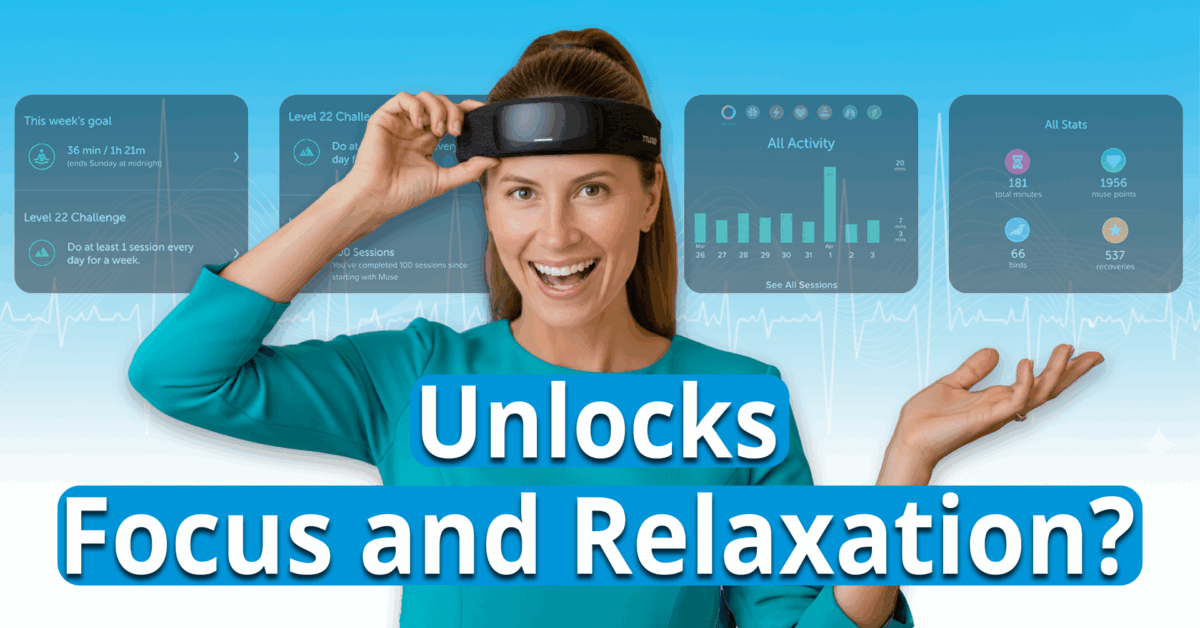
Today, we are talking all about the MUSE headband, what it measures, how it works, and whether it can really help calm the fight, flight, or freeze response that we’ve been talking about so much these past few months.
I do want to thank MUSE, who sent me the headband, and I’ve been testing it out for a few months now, so I definitely want to share this insight.
What is the MUSE?
So the MUSE is a wearable EEG device. I know, it’s pretty amazing. EEGs, you might be thinking, “That’s what my child’s neurologist does, right?” And yeah, EEGs, when it’s in the hospital, you’re going to have many different probes on your head, and it’s in there with glue and everything. This is a really great headband. It’s soft and flexible.
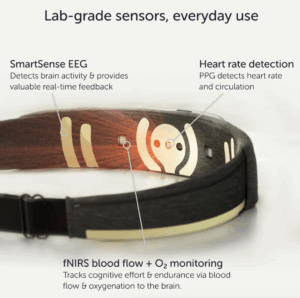
And this wearable device, since it’s an EEG, means it actually reads the electrical activity of your brain in real time. You wear it across your forehead, behind the ears, like a little headband, and it connects to an app on your phone, and it can give you instant feedback when you meditate or when you’re sleeping.
Real-Time Neurofeedback Experience
So when you’re meditating, instead of thinking, Am I doing this right? The MUSE, if you select it, it gives you audio feedback.
So if you select, let’s say, you know, rivers. When your mind is nice and calm, and again, the EEG is measuring your brainwaves, then the noise of that river is nice and calm. But if you’re like, oh my gosh, what about this? What about this? What about this? It sounds like…You can hear just an audio of exactly what’s going on in your brain. It really gives you that neurofeedback
That neurofeedback is really great for meditation, because you get that instant feedback as to whether or not “you’re doing it right.” And I will say, there is no such thing as a bad meditation. None.
Even if it feels like, “oh man, I didn’t do it right.” You did it by sitting on the mat and actually putting in the time. That’s how you strengthen the muscle. It starts somehow. Sometimes it starts with not having a good meditation. But keep going.
The Science Behind the MUSE
The MUSE uses the EEG sensors to pick up the brainwave activity, especially in areas associated with focus and relaxation. It translates the signals into feedback.
That’s how you can help train your brain to spend more time in calm, regulated states. That’s what neurofeedback is. There’s research that shows neurofeedback can reduce anxiety and stress.
We definitely need that. Improve focus and attention. And also support better sleep.
All three things that an autism parent definitely needs. Research also shows that neurofeedback can help with emotional regulation. And that’s key for us. It’s also key for our children. And our children learn from us. It’s going to benefit your child greatly if you can get a handle on your emotional regulation.
Not necessarily the easiest of things to do. But it’s super important if you want to get out of that fight, flight, or freeze. You’ve got to break that pattern.
So focusing on emotional regulation is certainly key.
A Personal Perspective
Now, I’m fooling around with this headset, right? Having kind of fun, I’ve got to say, and I could not do this many years ago. When my daughter wasn’t sleeping, I could not focus; I was a mess.
I probably wouldn’t have been able to even operate this. So as you focus on your child, and as they start to improve, then you’ll start to notice yourself, like, wow, I’m on edge. I’m on edge, and I don’t need to be, and I don’t want to be. How do I unwind? So as your child gets better, you have to change as well.
You can’t stay stuck in fight, flight, or freeze. Or something bad is always going to happen. I have to be prepared.
You have to be vigilant. But as your child gets more and more healthy and can do things on their own and handle different things, then you’ve got to change just as much. And this is definitely where the muse can come in. Muse and different things like this, they don’t replace deeper healing or therapies, but they can certainly help retrain the nervous system to recognise what calm, like real calm, actually feels like. And it might be several years since you’ve felt calm. That’s where the neurofeedback comes in, which is so helpful, because you might think you’re calm, but you’re not.
Using MUSE as a Tool
I thought I was sleeping well, but I was not. And I’ll definitely get into sleeping a little bit. There is a great game on here in Muse that helps improve concentration.
I’ve started playing around with it at night instead of scrolling. It’s actually quite satisfying to get this owl to fly. It definitely is fun, but it’s not easy.
I can’t say I don’t get it to fly all the time. And the funny thing is, sometimes I’m still so stressed and so tight that I can’t even get the sensors to work until I relax. A lot of times, I hold this tension, and when they don’t fully connect, that’s when I’m like, okay, breathe, relax. I’ve got to really tell myself, relax, because you’re so stressed, you can’t even use the muse. So first step for me sometimes is de-stressing, so I can actually use the muse to train my brain to be calmer, which is kind of funny.
Gamified Neurofeedback
I find it funny that with the game you pick, the session length, I usually just do five minutes. That’s the way it stays fun, and I don’t need to be doing this for hours and hours. There’s this calibration period, and I really found calibration periods are ways for me to kind of tune in and prepare myself. And then the game starts. There’s got this cool music.
I found it best if I start at 300 and count backwards by threes. That’s really what gets my brain focused, and if I can maintain that, then the owl is just flying, and it’s super fun.
So the music is encouraging. There are certain places where you can swipe, and the owl goes faster, keeping track of the total distance. So, as a game, you are retraining your brain, but in a fun way.
Sleep Tracking With MUSE
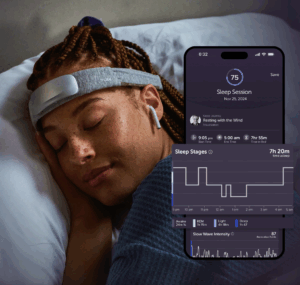
The muse headband also helps improve sleep by training the brain to enter calm, restorative states more easily. By measuring brainwave activity during rest, the Muse can give you insight into when your mind is truly relaxing versus when it’s still active. Also, when you are awake, how much time you’re spending awake, how much time you’re spending in light sleep, in REM sleep, in deep sleep. There’s a lot of data that you can get to understand your sleep.
How MUSE Changed My Routine
Now, I’ve actually changed my meditation time based on the muse.
I used to get up at around 4 a.m. to meditate for about an hour or so. I really loved that time because the house was quiet. I could just roll out of bed, get on the zafu and zabuton, which is just a meditation pillow, and start meditating.
When I started tracking my sleep with the Muse, I saw how getting up at 4 o’clock in the morning was really killing my sleep. It was unbelievable. So I actually changed my meditation from 4 a.m. to about 5.30 or so.
This way, I sleep all the way through the night. I try. We can get to that.
Sleep Insights and Goals
I sleep all the way through the night, and then I just wake up, meditate, and then go on with life. But it’s really cool about all the data that the Muse tracks with sleep.
So it turns out, even when I changed my meditation time from 4 a.m. to much later, to 5.30 or 6, my sleep score, the average, was like 65. And there are a few nights where I got like an 80 and then a 92. And the person I was in those days was like the person I want to be every day. Like I want to wake up that rested, that cheerful.
I found that when I’m getting sleep, and my score is 65 or below, my thoughts are so negative. I just think, “Oh my gosh, I can’t do anything. Everything’s going to be tough.”
I’m such a pessimist when I don’t have quality sleep.

How can families use this?
I would recommend that if you’re a parent, start with yourself. Get to know the Muse, get to know how to use it, the ins and the outs, putting it on, how it positions particularly, and really start using it just five, ten minutes a day. It doesn’t have to be anything really super intensive; use it to track progress, how things change. And for older kids, they might see you using it and say, “Hey, I want to try.” So you might want to start them out with the game.
For kids, maybe those who you’ve worked on a lot of different issues, and then the issue at school might be that they need to focus more. Then again, this would be something that you could use to help train the brain in a neurofeedback way, based on data, on how you can increase your child’s ability to focus.
Awareness Over Perfection
The most important thing about the Muse or anything like this is not about perfection. It’s about awareness, and when you can understand your body’s signals, you can respond in different ways.
You might be able to respond with compassion instead of frustration. As you would have in the past, because now you have a lot more awareness of how I am feeling.
Final Thoughts
So overall, I think the Muse is a great product. I’m very thankful that they sent it to me. I will continue to use it because I think I can be a much more amazing person and parent, and everything, if my sleep is greatly improved, and I think the Muse will help me get there. We all want better sleep so we can be better parents to our children. They certainly deserve that.
Confused by all the information about autism? I’ve got you. Click the link to see how we can work together. Let me break down the science and provide you with clear, actionable steps to make your path forward easier.