Every time your child talks, learns, or focuses, they need energy.
What if your child isn’t unmotivated? They’re just low on energy. Every time your child talks, learns, or focuses, they need energy. That energy comes from tiny machines inside their cells. If those machines don’t make enough energy, your child can look unmotivated, but they’re not. They’re working with less fuel. So the question isn’t always, “Why won’t they?” It might be, “Do they have enough energy to?”
No ATP, no action.
Your child’s body runs on something called ATP. Think of ATP like money. Want to talk? Costs ATP. Want to focus? Costs ATP. Want to stay calm? Costs ATP. If ATP is low, the body has to choose what it can afford, and sometimes speech, focus, and behavior just don’t make the cut. So when you see struggle in your child, you might be seeing an energy budget problem.
There’s a spinning machine inside your child right now.
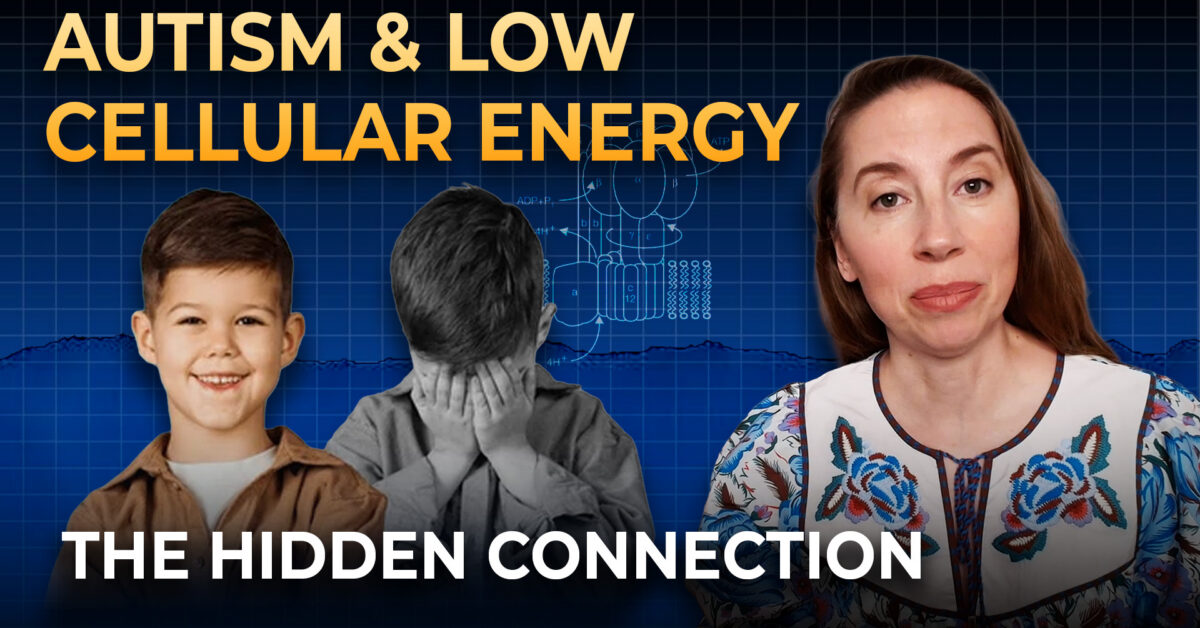
Inside cells, there’s a tiny machine called ATP synthase. It works like a water wheel. Tiny particles flow through it, and that flow makes it spin. When it spins, it makes energy. No spin, no energy. Your child’s entire body depends on this tiny little spin.
Energy is not just chemistry. It’s movement.
Inside the spinning machine, there’s a rod that turns. And as it turns, it forces the protein to change shape over and over, like squeezing something, then letting go. That motion is what makes ATP. So if that motion isn’t smooth, energy isn’t made well.
This one cycle makes your child’s energy.
There are three parts inside this machine. One is open, one is holding, one is squeezing. Then they switch. Open, hold, squeeze, release. That squeeze step, that’s where ATP is made. Over and over again. If this cycle slows down, everything slows down.
Magnesium might matter more than you think.
Inside the energy-making site, magnesium helps hold everything together. It stabilizes the reaction. It balances the electrical charge. Without it, the system becomes less efficient. Magnesium does a lot in the body, but this is one place it directly helps energy, and that may be why some kids feel better when taking it.
What if this machine slows down?
If the spinning machine slows, less ATP is made, less energy. And when energy drops, the body has to start to prioritize. The brain needs a lot. So does speech. So does focus. Those are often the first to struggle, not because your child isn’t trying, but because the energy isn’t there.
This can look like behavior, but it’s not.
Low energy can look like not listening, not responding, not engaging. Low energy can also look like not being able to sit still, running around.
Remember that last meeting you had to sit through? It was brutal. It took energy for you to sit still, to not fidget. So sometimes when our kids are running around looking like they are hyper, it can sometimes be that they don’t have the energy to sit still, but underneath, the system is strained. The brain is trying with limited fuel. What looks like behavior might actually be biology.
Why is your child different day to day?
Some days your child does great. Other days everything is harder. That can be energy. Because ATP is made every second. If the system is slightly better, good day. If it’s strained, hard day. Same child, different energy.
This one shift changes everything.
Instead of asking, “What’s wrong with my child?” try asking, “How is their energy system working?” Because behavior sits on top of biology, and biology runs on energy. When you understand the system, you can finally help in the right way.
Confused by all the information about autism? I’ve got you. Click the link to see how we can work together. Let me break down the science and provide you with clear, actionable steps to make your path forward easier