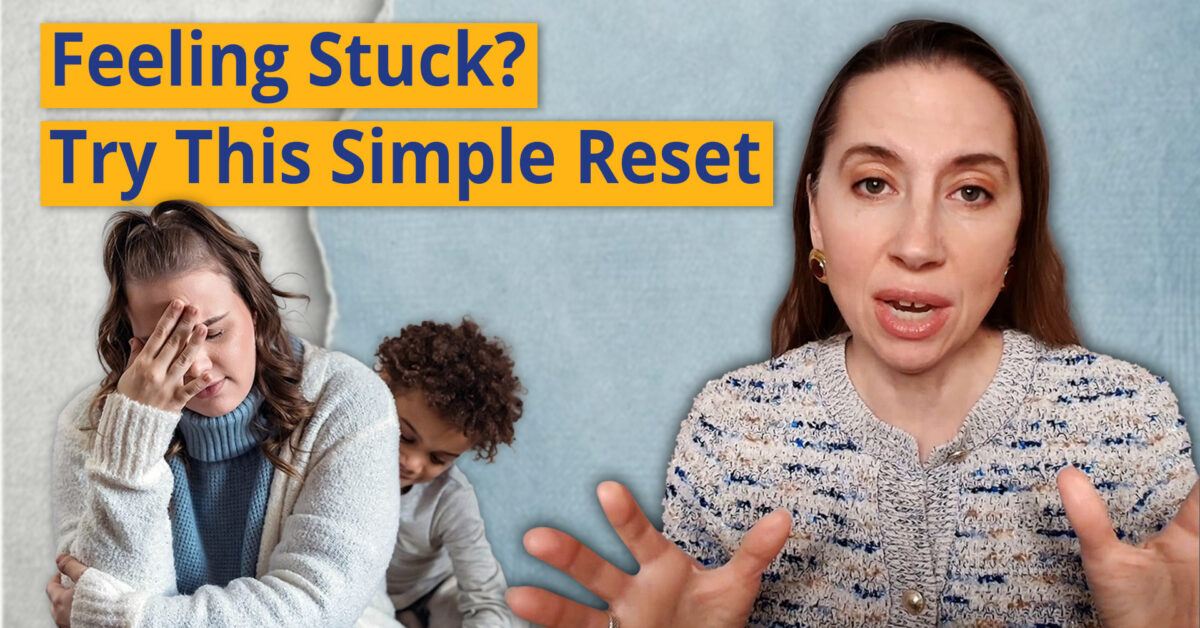
If you’ve ever felt like you’re doing everything for your autistic child- reading, watching, researching, trying- and still lying awake, thinking, what am I missing? What am I missing? I want you to hear this first. That feeling doesn’t mean you’re failing. It usually means you’re overloaded and I’m saying that with a lot of respect. Because the parents who feel this the most are usually the ones who care the most. You’re not lazy. You’re not checked out. You’re not behind because you didn’t love your child enough. You feel behind because you’re trying to make good decisions in a system that gives you too many options and no clear direction or guidance on how to choose between them.
Too Much Information, Not Too Little
Most parents aren’t short on information. They’re drowning in it. Ten different experts. A hundred different posts. Advice that sounds urgent, emotional, and convincing, but rarely comes with context. So you’re left trying to build a plan out of all these random pieces while living real life.
The Hidden Challenge of Prioritization
Here’s the part that no one really talks about. The internet gives you information, but it doesn’t help you prioritize. And when you can’t prioritize, everything feels equally important. Sleep, speech, food, behavior, school, therapies, supplements, labs. When everything feels important, your nervous system never gets a break. I hear this story all the time.
The Late-Night Research Spiral
It’s late at night. Your child finally falls asleep. And I used to do this too. You tell yourself, you’re just going to look up one thing. And then suddenly, 40 minutes later, what happened? One video says, this is the missing key. Another says, don’t ever do that. A comment thread scares you. And now your chest feels tight. And you’re thinking, am I doing this wrong? Am I missing something? Should I change everything? That spiral doesn’t mean you’re weak.
It means you’re trying to make high-stakes decisions. This is your child’s future without a way to sort what actually matters right now. That’s not a character flaw.
That’s a systems problem.
The Real Question Parents Are Trying to Answer
When a parent is trying to figure out the next step, they’re not really asking what’s the best intervention. They’re asking something much more practical. What is most likely to make a real, meaningful difference for my child and for our family life? Because if something helps on paper but makes daily life harder, what’s the point
The Importance of Realistic Consistency
The next question is one most parents are rarely encouraged to ask. What do I honestly think I’ll be able to do consistently? Not perfectly, not forever, but consistently. Consistency matters, realistically, because a plan that looks great but never actually happens does not help your child consistently.
Consistency almost always matters more than intensity.
Defining What Progress Actually Means
And then there’s the part that often gets skipped. How will I know if this is working? What does success actually look like? Is it something that I can observe day to day? Is it something that I can track? Is it a lab test, an assessment, a change in function or regulation? If you can’t define how you’ll measure the progress, it becomes very hard to feel confident that you’re moving forward.
Why Parents Feel Stuck
This is where a lot of parents get stuck. When progress isn’t clearly defined, it feels like nothing is working. So things get changed, then changed again, then changed again. Not because parents are impulsive, but because they’re trying to feel progress without a way to measure it.
Reframing the Feeling of Failure
So if you’re thinking, okay, this really sounds like me, I want you to pause for a second. There’s a huge difference between I’m failing and I’m trying to do too many important things at once without a way to prioritize or measure.
One of those is judgment about who you are. The other is a solvable problem.
A Simple Reset to Regain Clarity
Here’s a quick reset you can do right now.
Open a note on your phone, take out a piece of paper, and write down just three things.
Step 1: Identify the Most Important Area
One, the one area that would most improve life right now for your child or your family.
Step 2: Choose One Action You Can Maintain
Two, the one thing you believe you can follow through on for the next week.
Step 3: Decide How You Will Measure Progress
Three, how you’ll know if it helped.
That alone can bring more clarity than hours and hours of researching.
Why Guidance Matters More Than More Information
This is exactly why I built Navigating Autism the way I did. Parents don’t need more information. They need help prioritizing, choosing what fits their real life, and knowing how to tell if something is working. They need navigation, not pressure.
Where to Start When You’re Feeling Overwhelmed
If you want a more structured way to think through next steps, you can learn about Navigating Awetism. You are not failing. You’re overloaded, and you don’t have to do this alone.
Confused by all the information about autism? I’ve got you. Click the link to see how we can work together. Let me break down the science and provide you with clear, actionable steps to make your path forward easier