Can the air we breathe affect brain development? Today we’re talking about something in the air- literally the air. We’re diving into a gas called nitrogen dioxide, or NO2, for short. And what scientists are discovering about how breathing it, especially before and right after birth, might be connected to autism.
What even is NO2?
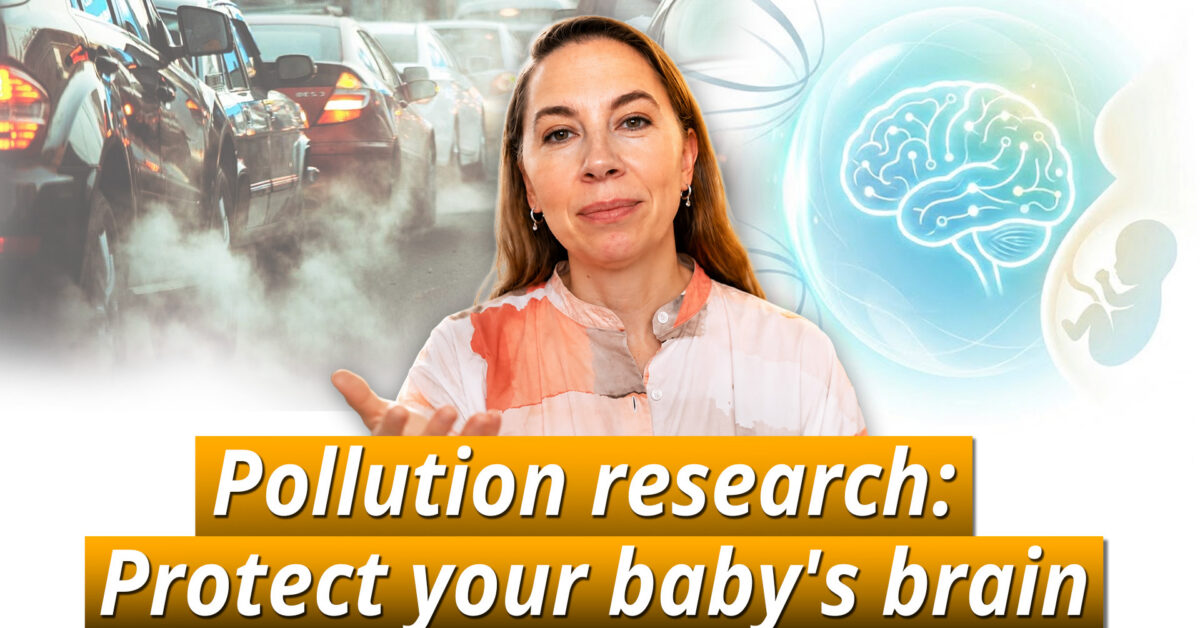
Picture this. You’re standing next to a busy road. Cars are zooming by. Every time a car burns gas or diesel, it shoots tiny, invisible chemicals into the air, and one of those chemicals is called nitrogen dioxide, NO2 – think of this air exhaust as an invisible exhaust soup. It’s not something you can really see or smell easily, but it’s floating right there in the air.
NO2 is a big deal in cities and near highways. The more traffic, the more NO2. And here’s the thing: we all breathe it. But scientists are now asking what happens when a growing baby in the womb, or a really young child, gets exposed to a lot of it? That’s exactly what dozens of research teams around the world have been studying, and what they’ve been finding is pretty eye-opening.

What does NO2 do inside the body when you breathe it in?
NO2 doesn’t just stay in your lungs; it goes into your bloodstream. And when it gets into your bloodstream, it can cause something called oxidative stress.
What’s oxidative stress?
Imagine your cells are like clean, fresh apples. Oxidative stress is like when the air hits a sliced apple, and it starts to change; something gets damaged. Now imagine that happening in a baby’s developing body and potentially their brain. The brain is building itself during pregnancy, and in the first few years of life, it’s creating millions and billions of connections, like wiring up a giant electrical system. When NO2 causes oxidative stress- that browning effect in the brain- it can really mess up that wiring process.
Scientists have also found that NO2 can trigger inflammation, making your immune system go into overdrive. Damage the blood-brain barrier. Think of that as the security gate protecting the brain. NO2 can actually weaken that protection. It disrupts genes called CNT and AP2. This gene helps brain cells talk to each other, and it’s one of the most well-known genes linked to autism.
What do the big studies actually say about NO2?
Scientists don’t just study one baby. They look at hundreds of thousands of babies all at once to see different patterns. These big studies are called meta-analyses. Basically, they take all the smaller studies and add them up to try and get one big answer.
What several major meta-analyses have found about NO2 and autism.
In 2021, scientists looked at nearly 759,000 babies. They found that babies whose moms were exposed to more air pollution during pregnancy had a higher chance of being diagnosed with autism. NO2 was part of that picture, though the evidence for it was still developing at the time.
A 2024 study: the window-by-window study. This one is really cool. Scientists looked at 369,000 children from 27 different studies and figured out that during pregnancy or early life, exposure mattered the most. So before pregnancy, there was a 28% higher chance of an autism diagnosis; exposure in the first year of life, a 33% higher chance; during pregnancy itself, 7 to 15% depending on the trimester in 2025.
The ECHO consortium
That is the environmental influences on child health outcomes. That’s the department within the National Institutes of Health here in the US; the researchers from 44 different research teams across the US pooled about 8000 moms’ and kids’ data. They found that the effect on autism depended heavily on where you lived, strong in some regions, weak in others.
There was little evidence for differences between boys and girls in the association between prenatal air pollution exposure and autism outcomes. That tells us pollution doesn’t work in a vacuum. Your local environment and what other pollutants come with it really matters. I like to be very honest about what science knows and what it doesn’t know. So there was a huge study in California families.
There was a large study of 295,000 California families, and that found that NO2 had no significant effect on its own, while a different kind of pollution, called PM 2.5, did. Those are really tiny particles. That certainly did. And the 2026 analysis of the same ECHO data also found no significant link to autism when everything was pulled together.
So the science about NO2 isn’t finished yet, and O2 is a suspect, but probably not. Acting alone does not affect everyone the same way. Now here’s a question scientists are asking: does everyone have the same risk? And the answer is no. Some kids and families may be more vulnerable than others.
Here are three things that seem to make the effect stronger
1. Sex difference
Air pollution is neurotoxic to all children, but biological sex dictates how and when that damage manifests in the developing brain. Boys do frequently show greater vulnerability to cognition and attention deficits, whereas girls exposed to the same level of air pollution are more likely to experience vulnerability in emotional regulation, mood, and specific memory domains.
2. Low folic acid during pregnancy.
Folic acid
The B vitamin moms take during pregnancy seems to act like a protective shield. When moms don’t get enough of it, their babies may be more vulnerable to the effects on the brain. This means good nutrition and supplementation might actually help protect developing brains from pollution. Parents are now doing the FRAT test before conception, so they can actually understand more about the mom’s folate status.
3. Certain genes
In 2014, there was research published that showed some children carry a specific version of a gene called Meti that, when combined with traffic pollution exposure, increases the autism risk even more.
This is what makes autism so difficult to find. One single cause for every diagnosis of autism.
What can families actually do?
Okay, this is the part that really matters. Knowing the science is great, but what do you do with that knowledge? Here are five evidence-based steps to consider, especially if you’re pregnant. Planning to be or have young kids?
1. Know your air quality
Check air quality daily at different websites, and on high-pollution days, especially near wildfires or in the summer heat, limit outdoor time for young children and pregnant moms; it really makes a difference.
2. Things about where you live
Living right next to a busy highway means higher daily O2 exposure. Even a few blocks of distance from high-traffic roads can make a real difference.
3. Use HEPA air
Use HEPA air purifiers indoors. They can’t remove all of it. Two, but they reduce copper-like PM 2.5 that travel with it. It’s practical and accessible for us as parents to do
4. Prioritize folate
Especially methyl folate, through diet leafy greens, lentils, beans or supplementation, or a prescription version for families with gene variations; methyl folate, rather than the standard folic acid, may be especially important.
Folate appears to be one of the most protective nutrients against pollution-related neurodevelopmental risk factors. Knowing one’s frat status is important as well.
5. Reduce what you can
This research doesn’t mean every child in a city will develop autism. Autism has many causes, and pollution is just one piece of a complex puzzle. But reducing unnecessary exposure is a smart move for every family.
What we covered
- NO2 is a common gas from car exhaust. It’s invisible, but real. Two, research on hundreds of thousands of children has found links between no.
- Exposure during pregnancy and early childhood is linked to increased autism risk.
- The effect appears strongest before pregnancy and in the first year of life. Kids with certain genes and babies of moms with low folate may also be vulnerable. And lastly, the science isn’t completely settled, so major studies show stronger links than others. But there are practical and real-world steps that your family can take right now. If this helped you, please share it with another parent, educator, or anyone who cares about brain health.
Confused by all the information about autism? I’ve got you. Click the link to see how we can work together. Let me break down the science and provide you with clear, actionable steps to make your path forward easier